
Autopsy of Silence
By Bertran Evarini
An advertisement has died. A Halloween concept trailer turns that premise into a noir investigation, with AI-generated imagery, editing and sound design.
My role: Screenplay, image generation, video generation, editing and sound design.
The case: who killed the advertisement?
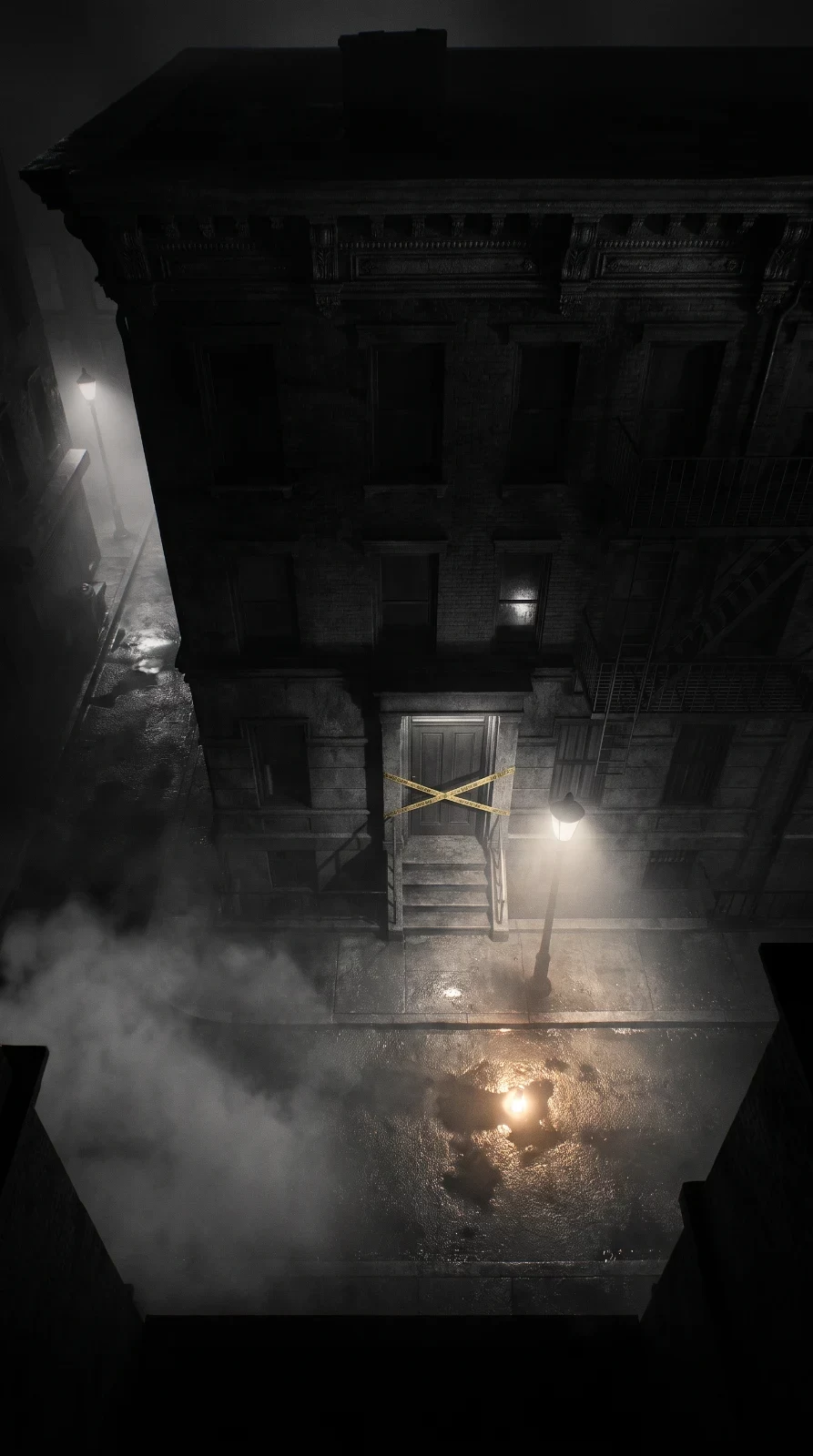
In Autopsy of Silence, the victim is an advertisement. What could have been a discussion about communication becomes a criminal investigation, complete with a cordoned-off scene, documents, suspicions and an evidence board. It is a trailer for a film that does not exist, developed collaboratively at PB Marketing Digital for Halloween.
The metaphor connects the suspense of discovering what happened with a question familiar to anyone working in advertising: why can a message reach so many people and still receive no response? That question drives the fiction.
My role, from the first scene to the final cut
I handled the screenplay, image generation, video generation, editing and sound design. That placed me throughout the filmmaking process: deciding what each scene needs to communicate, creating its frames, turning them into moving images and finding the relationship between picture, rhythm and sound.
Vitor Fumagali, the agency's copywriter, contextualized and adapted the project, developed its literary narrative through the synopsis and created the video cover. My audiovisual work and his contribution came together around the same idea. It was a team effort, with different responsibilities and room to influence each other's creative decisions.
A world that must hold together across shots
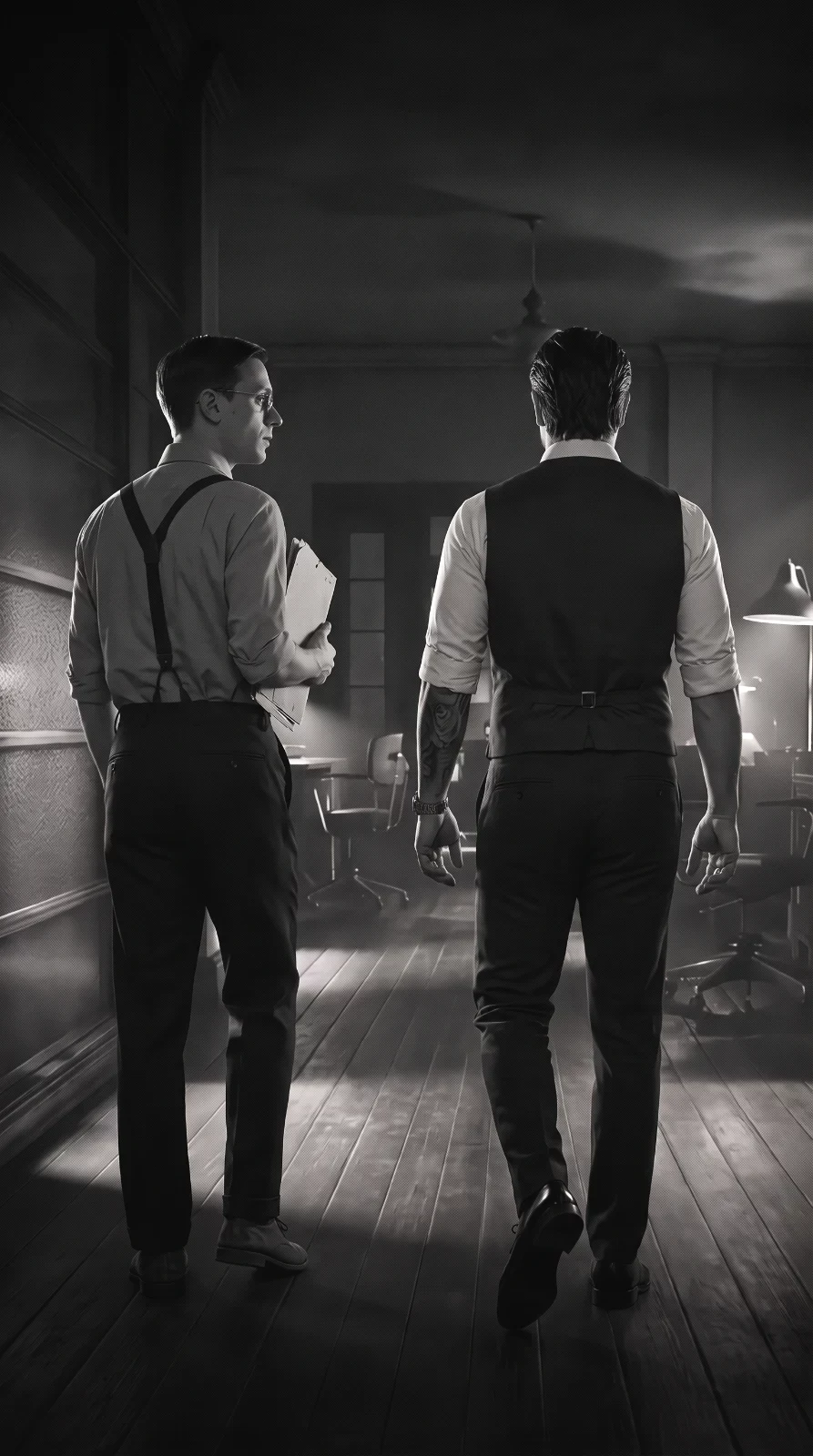
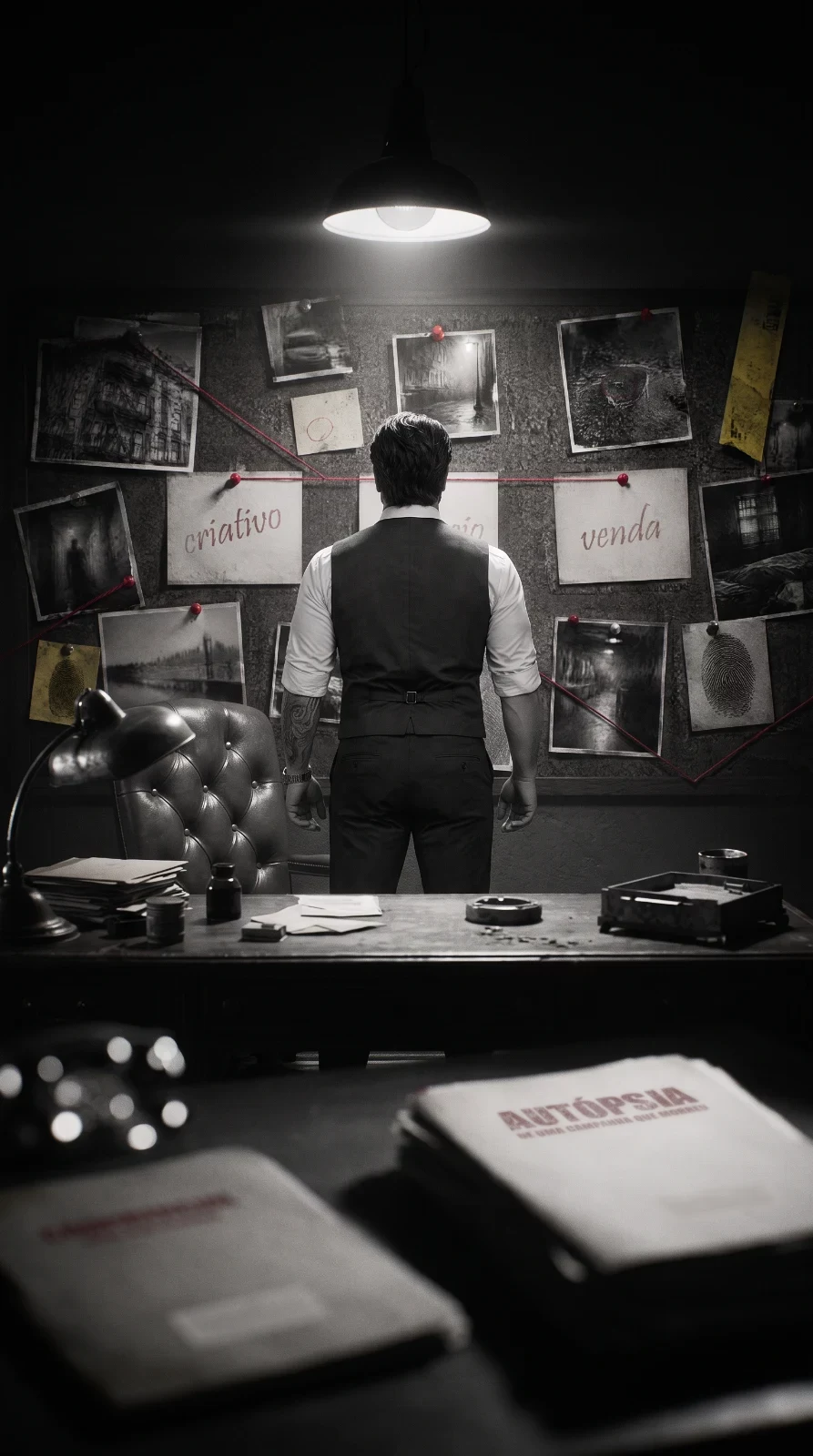
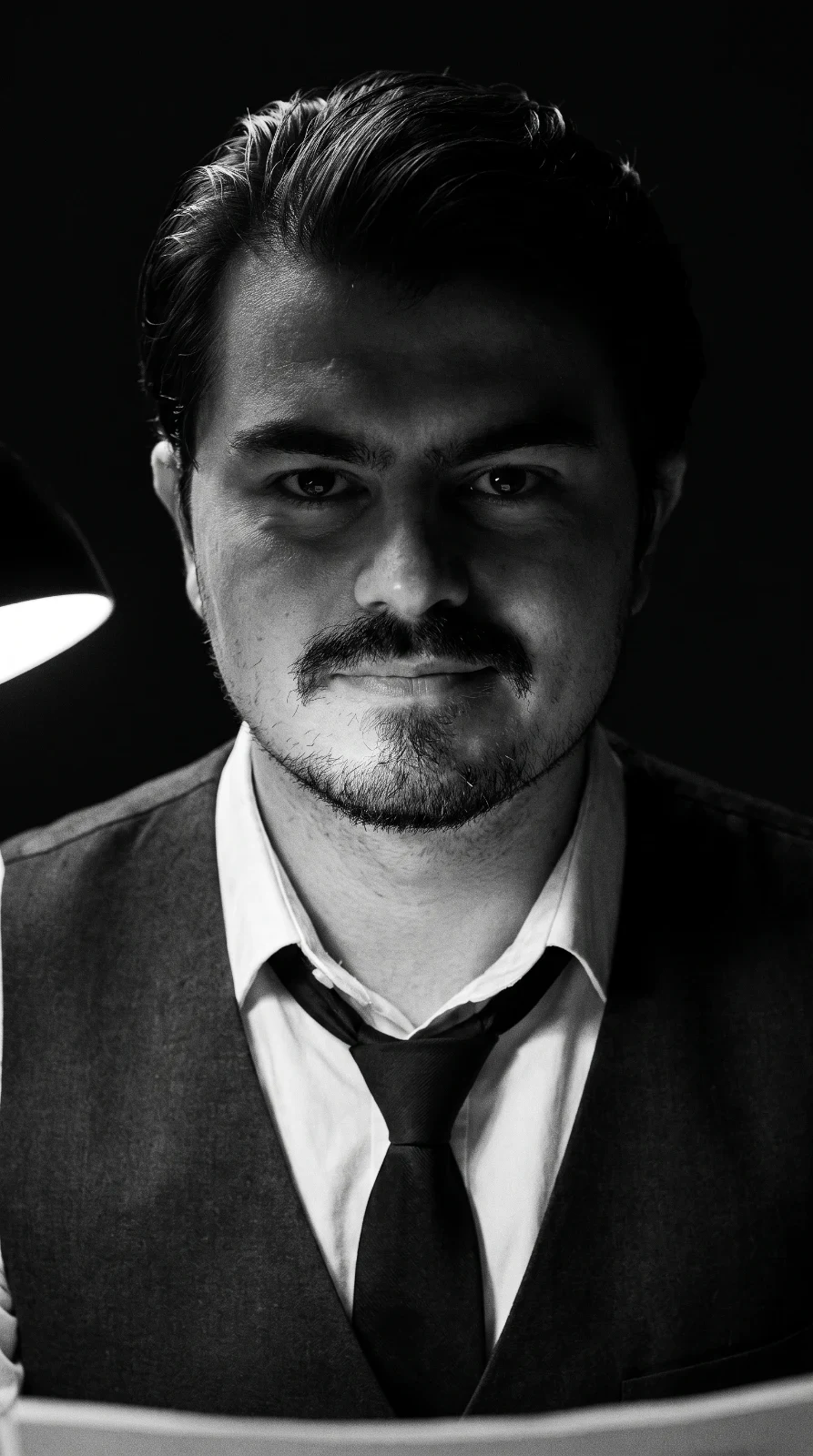
The film draws on noir: black and white, strong shadows, sharply defined light, dark corridors and characters in waistcoats and ties. The investigation first emerges through spaces and objects. Only later does it move closer to the investigator's face.
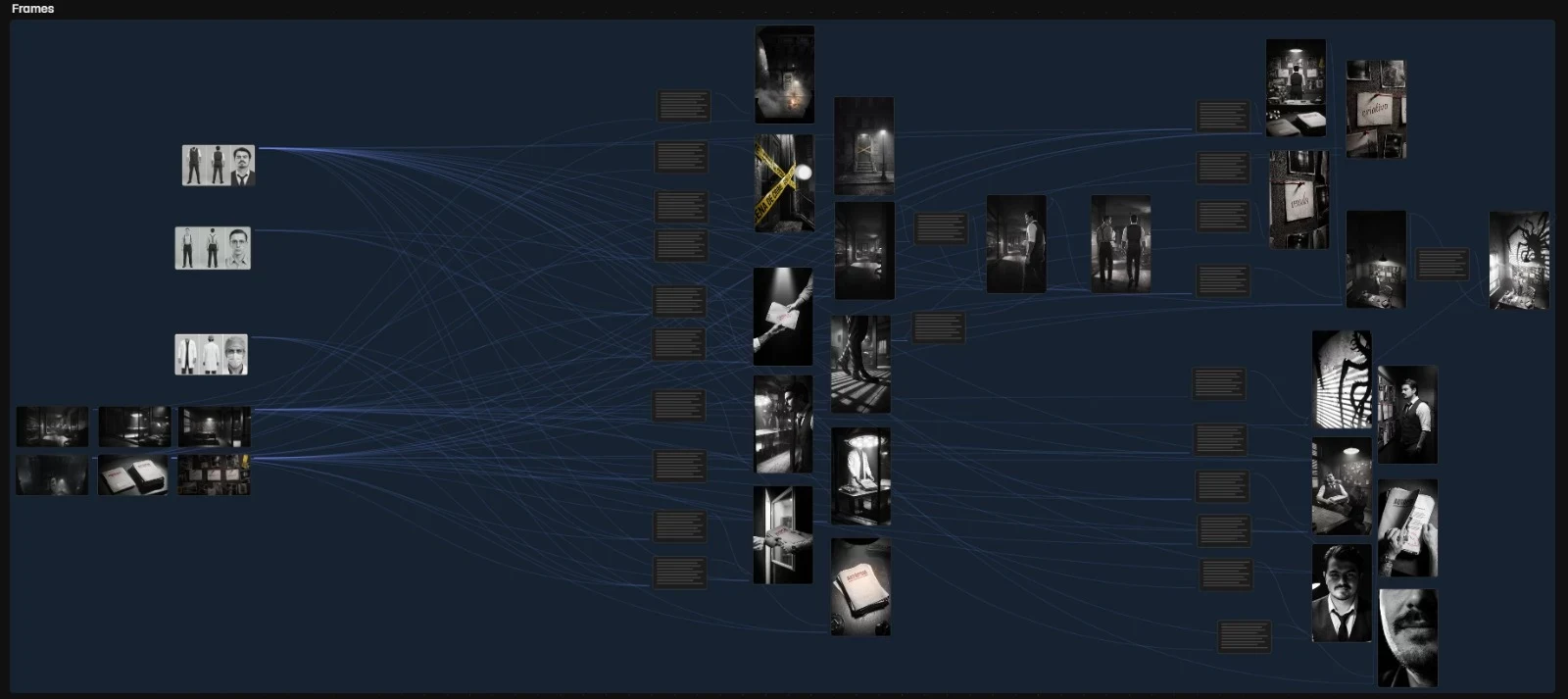
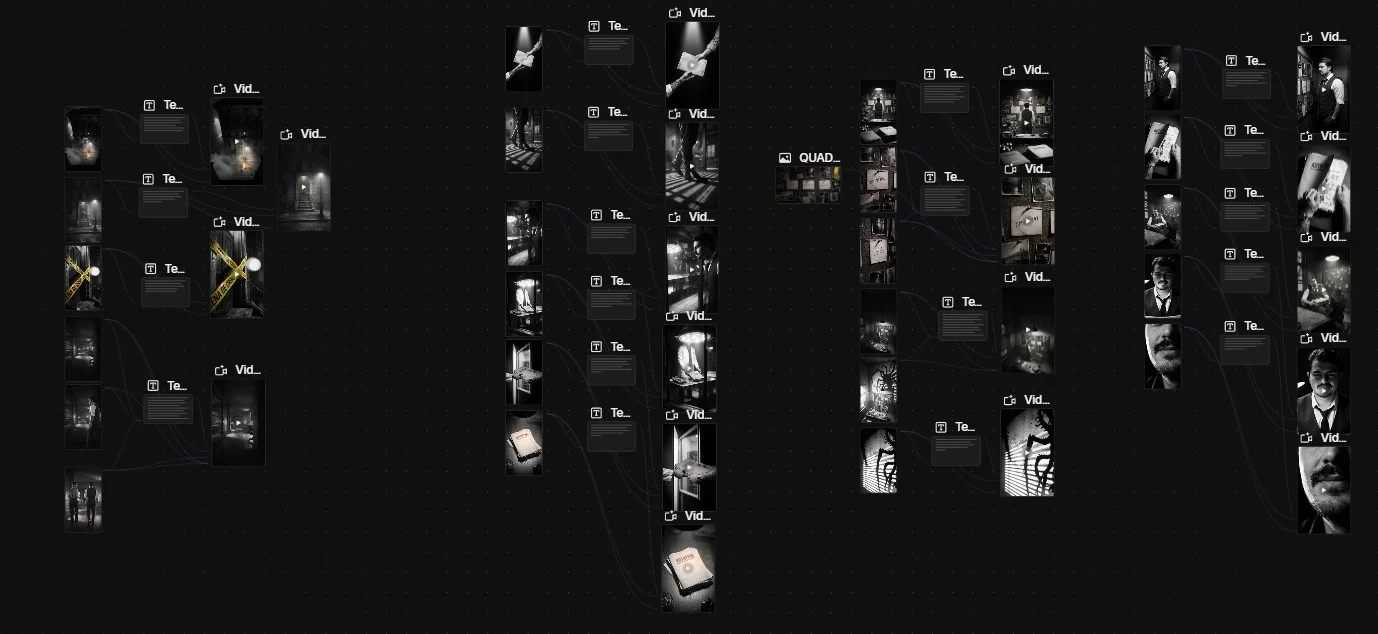
The image and video workflow trees show how this world was organized. Character and environment references branch into scenes, while concept frames feed the moving sequences. This structure gives each generation context: the next shot needs to belong to the same film, even when the camera distance or viewpoint changes.
The advertisement becomes evidence
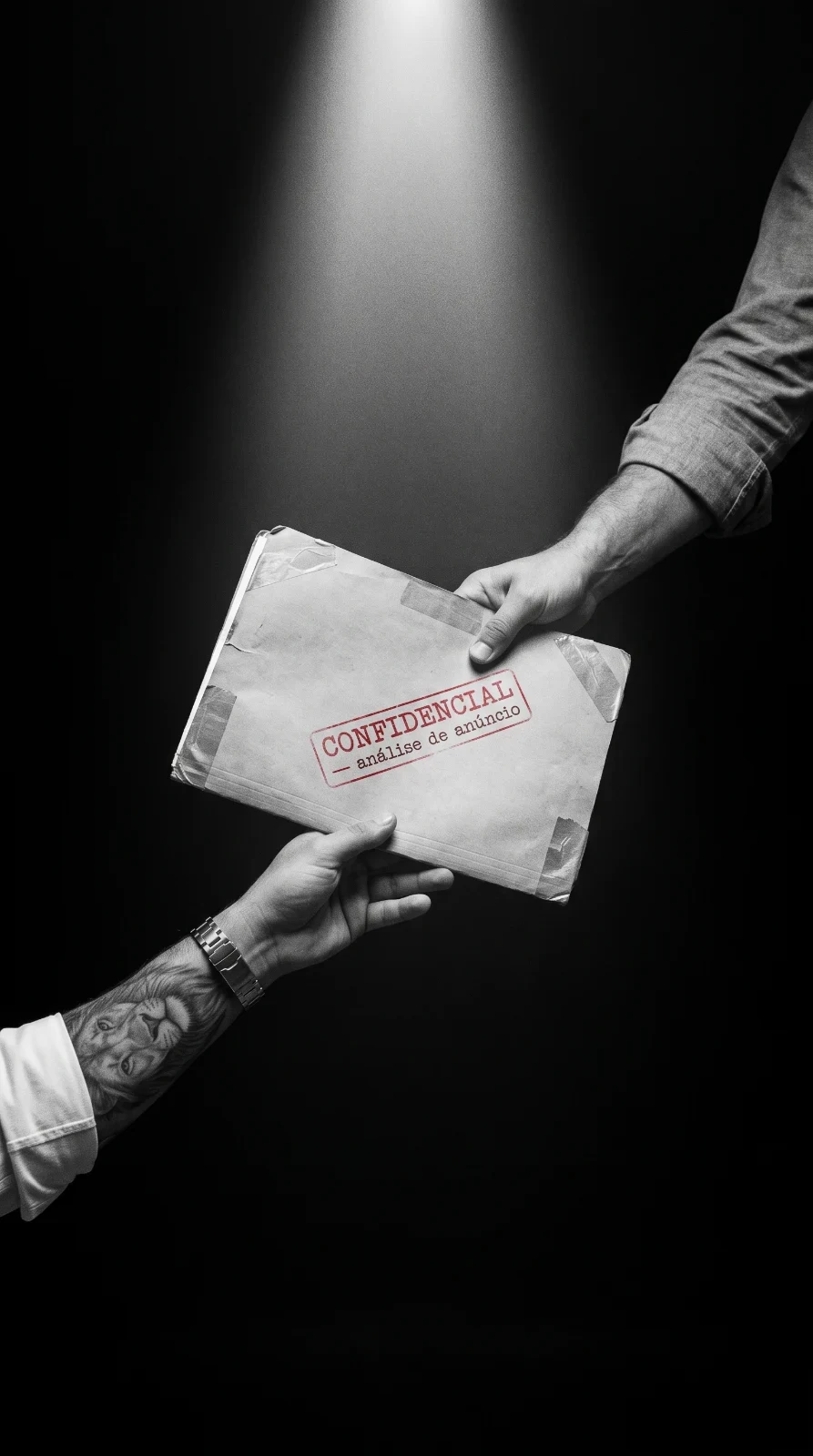
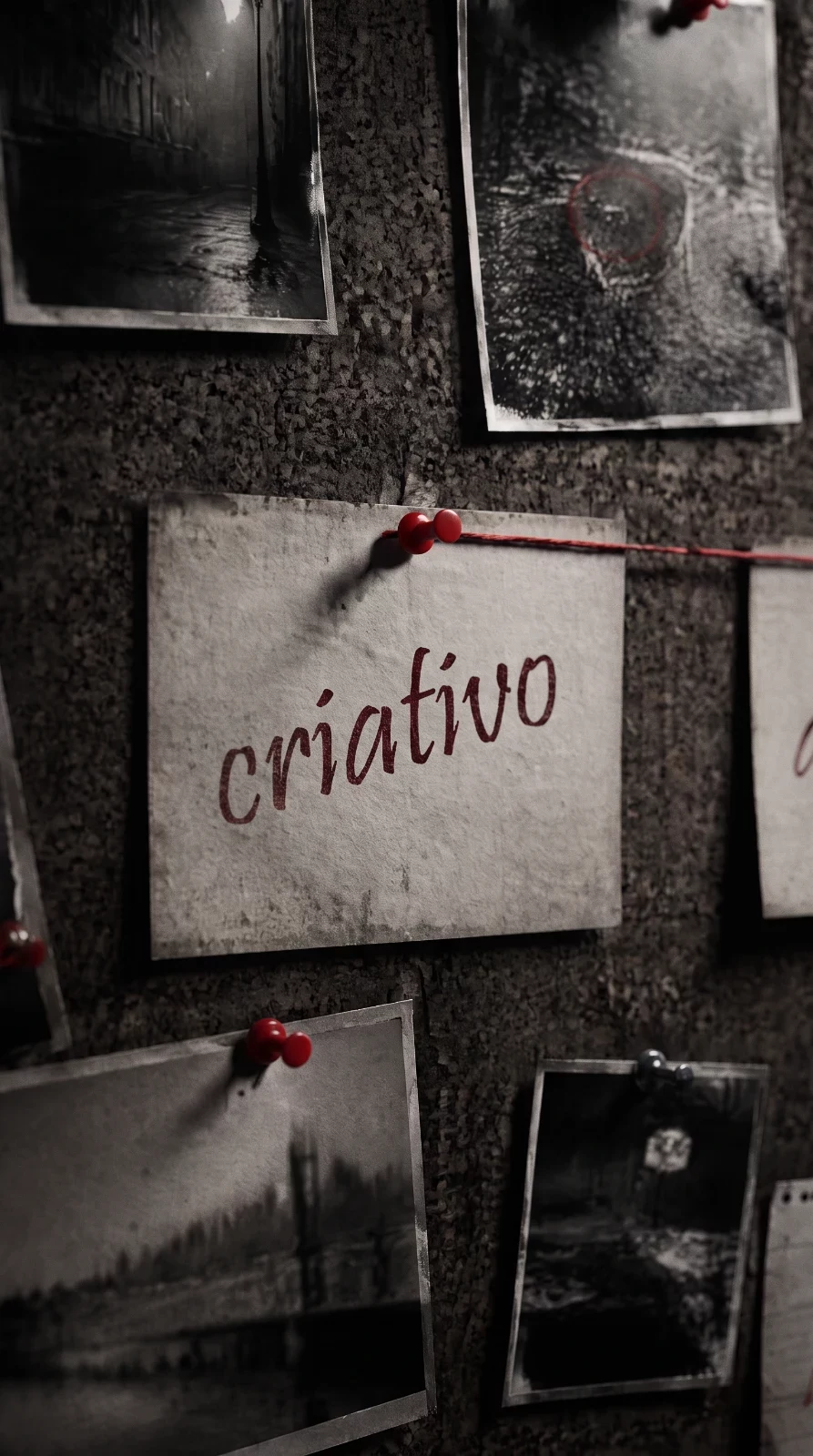
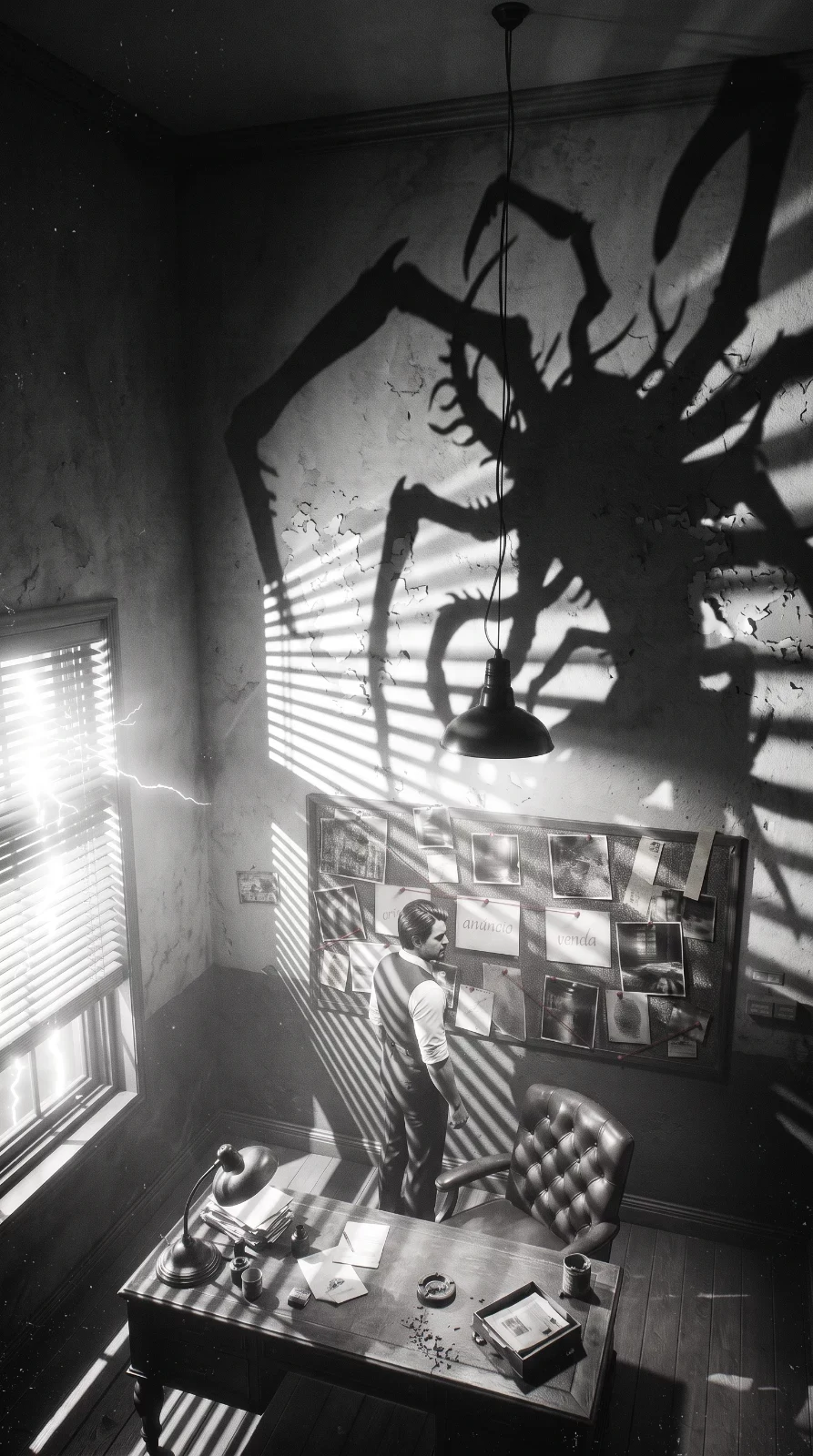
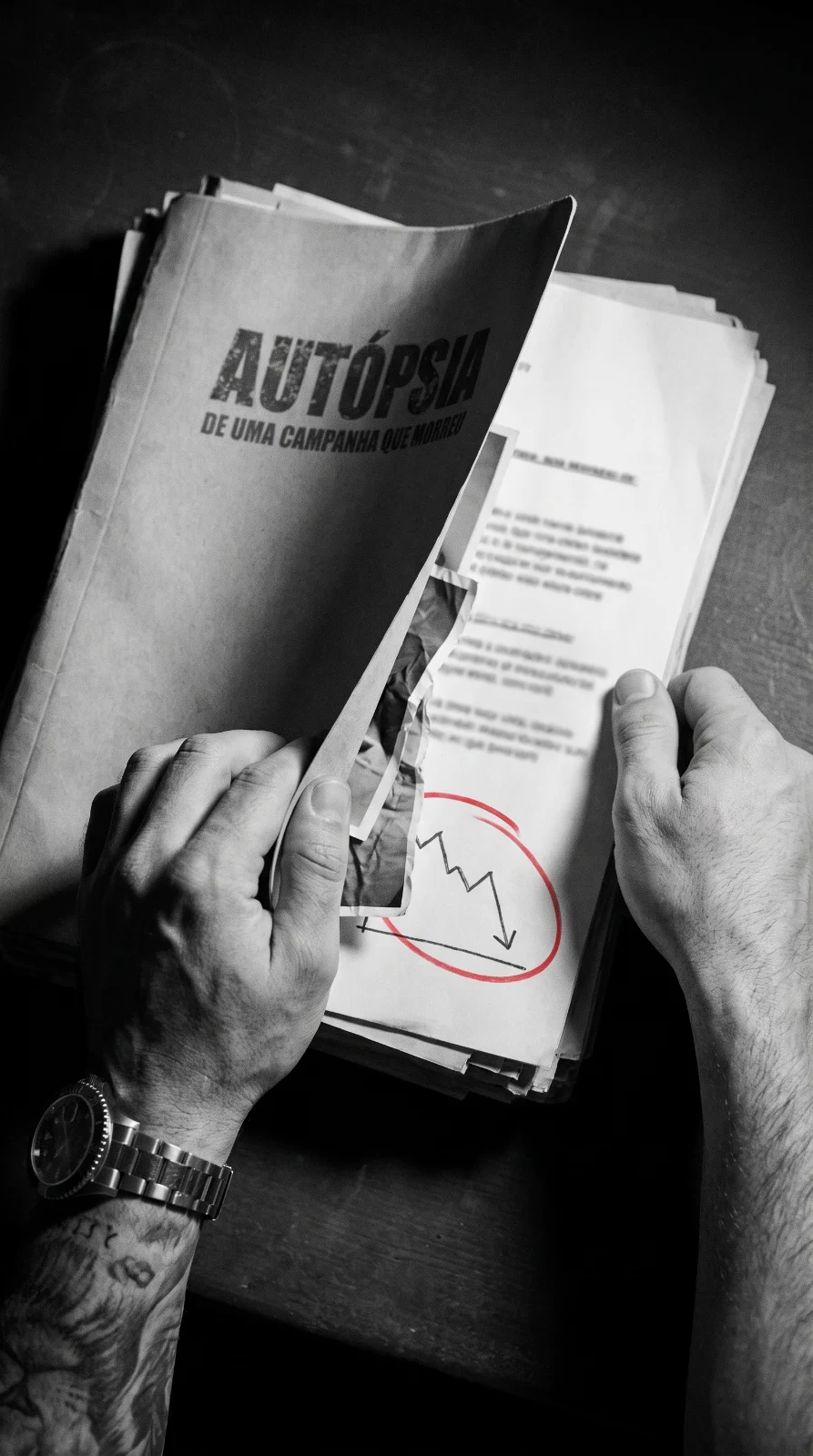
A document passes between hands. Footsteps lead the investigation onward. On the evidence board, words such as “creative” and “sales” bring advertising into the scene. Later, the shadows take on a monstrous form: the case moves beyond a police investigation and meets Halloween.
These details give the premise a visual form. Instead of explaining everything at once, the trailer offers fragments: a place, an object, a clue, a threat. The viewer connects them as the film unfolds.
From generation to editing
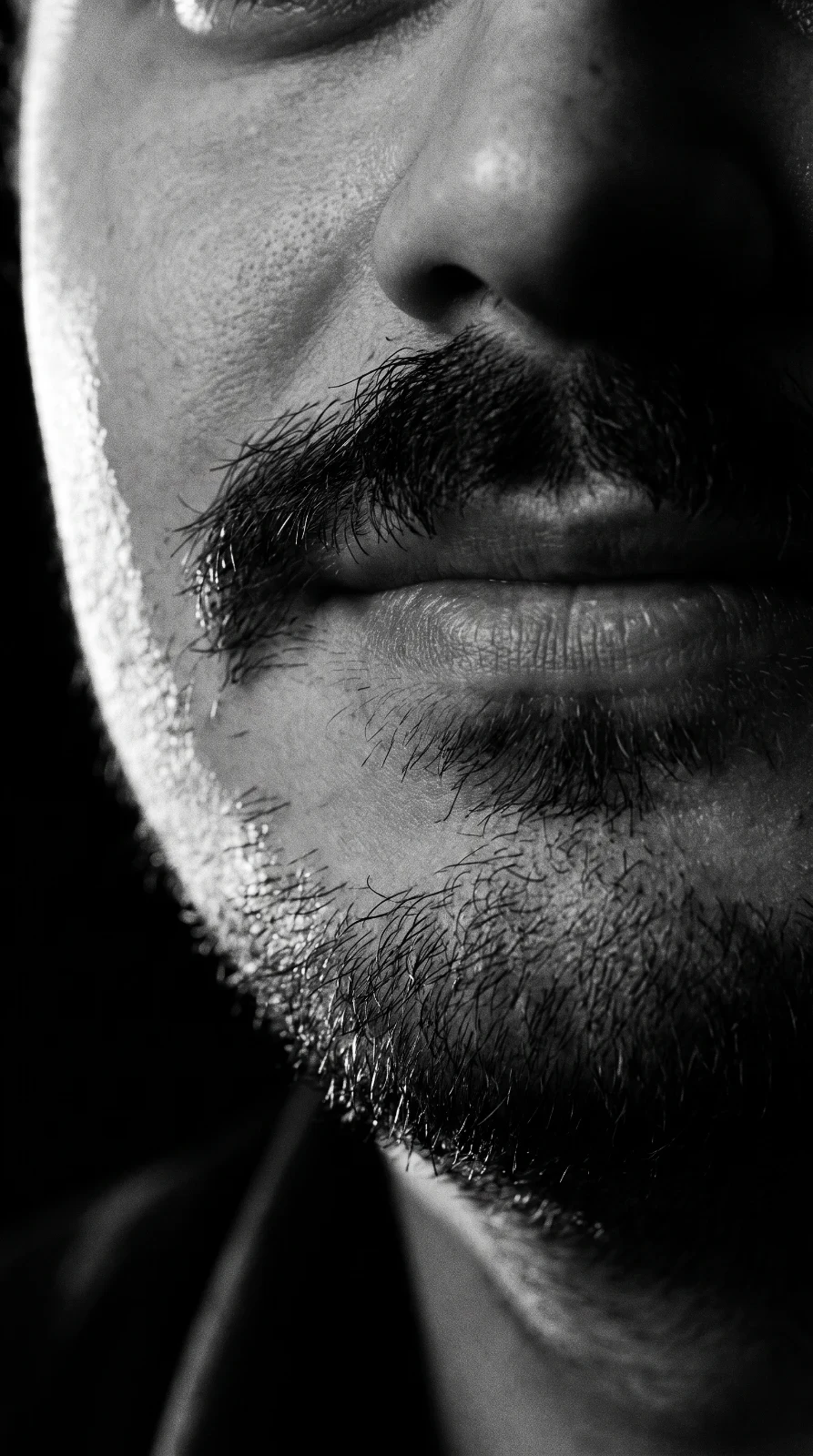
The vertical format guides the framing: doors, shafts of light, full-length figures and close-ups occupy the frame's vertical axis. The edit moves from environments to evidence and then to the face, concentrating attention before the title appears.
The finished video runs just under 48 seconds. The challenge is to make the idea work within that time without turning the trailer into a lengthy explanation. Generated images are working material; shot selection, cut duration, editing and sound design shape the final experience.
Behind the scenes: the jazz stayed out
I also handled the sound design. And there is one detail from our collaboration worth recording: I wanted to use jazz in the video. Vitor wouldn't let me. Haha.
Across screenplay, imagery, movement, sound and the literary perspective of the synopsis, each of us brought something different. The result is this small Halloween investigation into an advertisement that died — and the silence it left behind.
Synopsis — by Vitor Fumagali
The streets of Saint Joachim conceal monsters in plain sight. Neither the street lamps nor the feeble embers of the fireplace reveal their indescribable forms — the grotesque, egomaniacal nature sheltered beneath such familiar faces, greeting the neighbors and drawing the curtains before nightfall.
The oldest residents speak of a presence that arrives during sleep. They give it many names, though they lower their voices before uttering any of them. They say it first appears in mirrors, a dark spot behind one's shoulder. Then, even far from the glass, the feeling of being watched remains.
It was on one such night that they brought him to us.
They had carried his face to every corner of the city. They paid the heralds, bought places in the squares and sent his promise through doors that would never have opened to him. Thousands witnessed his existence. Very few showed any sign of recognizing it. His creators blamed the silence on distance. They fed the messengers more gold. Ordered them beyond the walls, to repeat the call, to let no gaze escape.
And the call was heard. In the regions where the maps end, something turned its head.
Since then, the records have multiplied with obscene abundance. There is movement in the passageways, visitors at the threshold, small signs their keepers receive as blessings. Every morning, they count them with devotion. Every night, they offer more.
But no one enters, no one stays, none of the outstretched hands brings what they were promised. The most devoted insist that all they need is another offering. Among the dead man's papers, we found the same plea, repeated until it lost all meaning. It spoke at length of his virtues, his greatness, everything he wished the world to see.
There was not a single word addressed to the person who was meant to answer. Perhaps that is why the other thing answered first.
Project credits
A collaborative project at PB Marketing Digital.
Bertran Evarini: screenplay, image generation, video generation, editing and sound design.
Vitor Fumagali: project contextualization and adaptation, literary synopsis and video cover.
Want to build an AI-assisted audiovisual story for your brand? Let's talk about the idea and what it needs to communicate.
Let's talk about your project